Peninsula Maintenance for Millbrae Garage Doors is a practical Millbrae guide for homeowners who want a safer first conversation before calling. The goal is not to turn a visitor into a technician. It is to explain how fog, slope, daily use, and attached garages change maintenance needs clearly enough that the caller can describe the symptom, avoid unsafe steps, and understand why the door may need inspection. Millbrae garages often sit near hills, attached living space, commute routes, and cool Peninsula air, so the same symptom can have different causes from one street to the next.
What garage door maintenance Millbrae means
A garage door problem usually shows itself as one obvious symptom, but the cause can sit somewhere else in the system. A heavy door may look like an opener failure. A reversing opener may be a sensor issue, a travel-limit issue, or a door that is dragging. A loud pop often points toward a spring or cable event, but the safe response is to stop forcing the door and describe what changed.
In Millbrae, a useful diagnosis starts with the door position, the sound, the movement, the opener behavior, and whether the door is crooked. Those details help separate simple checks from high-tension work. The site does not promise exact arrival times, fake ratings, or unsupported hours; it gives a verified call path at (650) 980-7050 and keeps the guidance grounded in observable symptoms.
- Check whether the door is open, closed, crooked, or stuck halfway
- Do not loosen springs, cables, or bottom brackets
- Do not bypass safety sensors to force a closing cycle
- Use photos only when they can be taken from a safe position
Safe checks before a service call
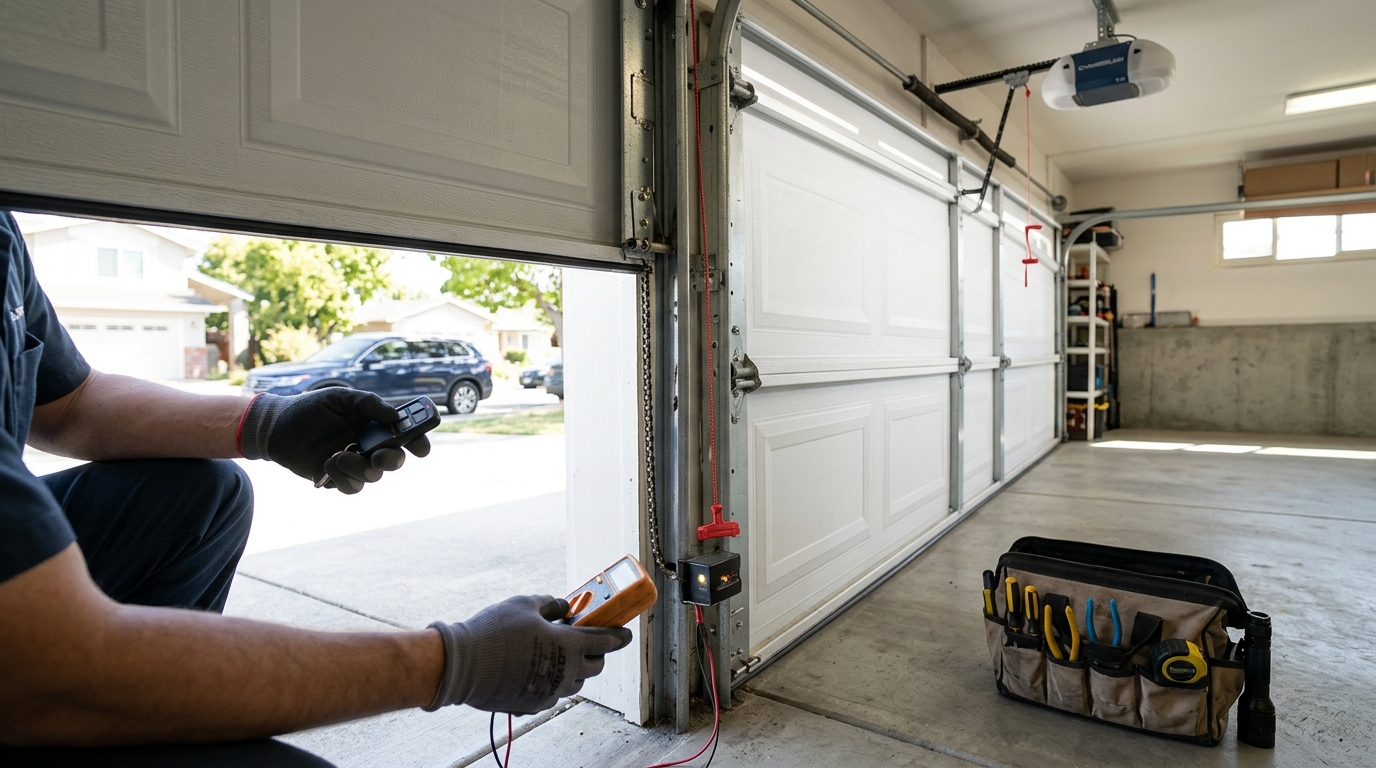
Some checks are reasonable for a homeowner: confirm power to the opener, replace a weak remote battery, check that the wall lock is not engaged, clear objects from the photo-eye path, and look for anything obviously blocking the tracks. Those checks do not require touching loaded hardware and may solve simple interruption problems.
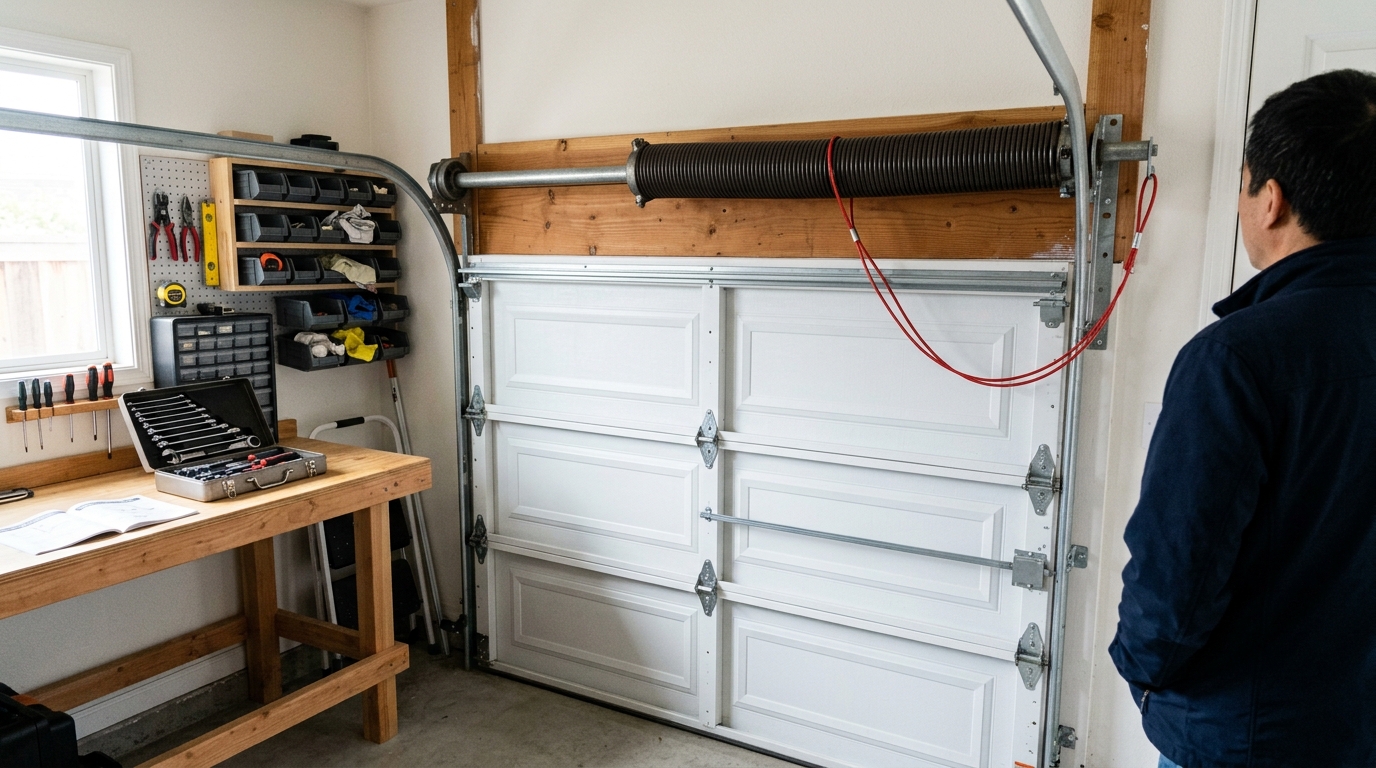
The line is stored force. Springs, lift cables, bottom brackets, drums, and a door hanging out of level can move suddenly. If the opener strains, hums, clicks, or stops after a few inches, the safest answer is not more force. It is a phone call with the symptom, the door size if known, and whether a vehicle is trapped.
- Power, remotes, wall lock, and clear sensor path are safe first checks
- Crooked, heavy, or hanging doors should not be forced
- A door that drops or shoots up by hand is not balanced
- Repeated opener reversal deserves a full door-and-opener check
How local conditions affect the repair
Millbrae has hillside homes, townhomes near commute corridors, older garage openings, attached garages below living space, and cool moisture that can wear seals and exposed hardware. A quiet attached garage may need a different opener discussion than a detached storage garage. A steep driveway changes how a stuck door can be safely stabilized.
The useful upgrade is not just more words. It is a clearer page that answers what a caller worries about: whether the door is safe, whether this is opener or door hardware, whether repair or replacement makes sense, and what details help the phone intake. That is why the blog pages link back to service pages instead of sitting as isolated posts.
- Hillside access changes how a door can be held and inspected
- Attached garages make noise and vibration more important
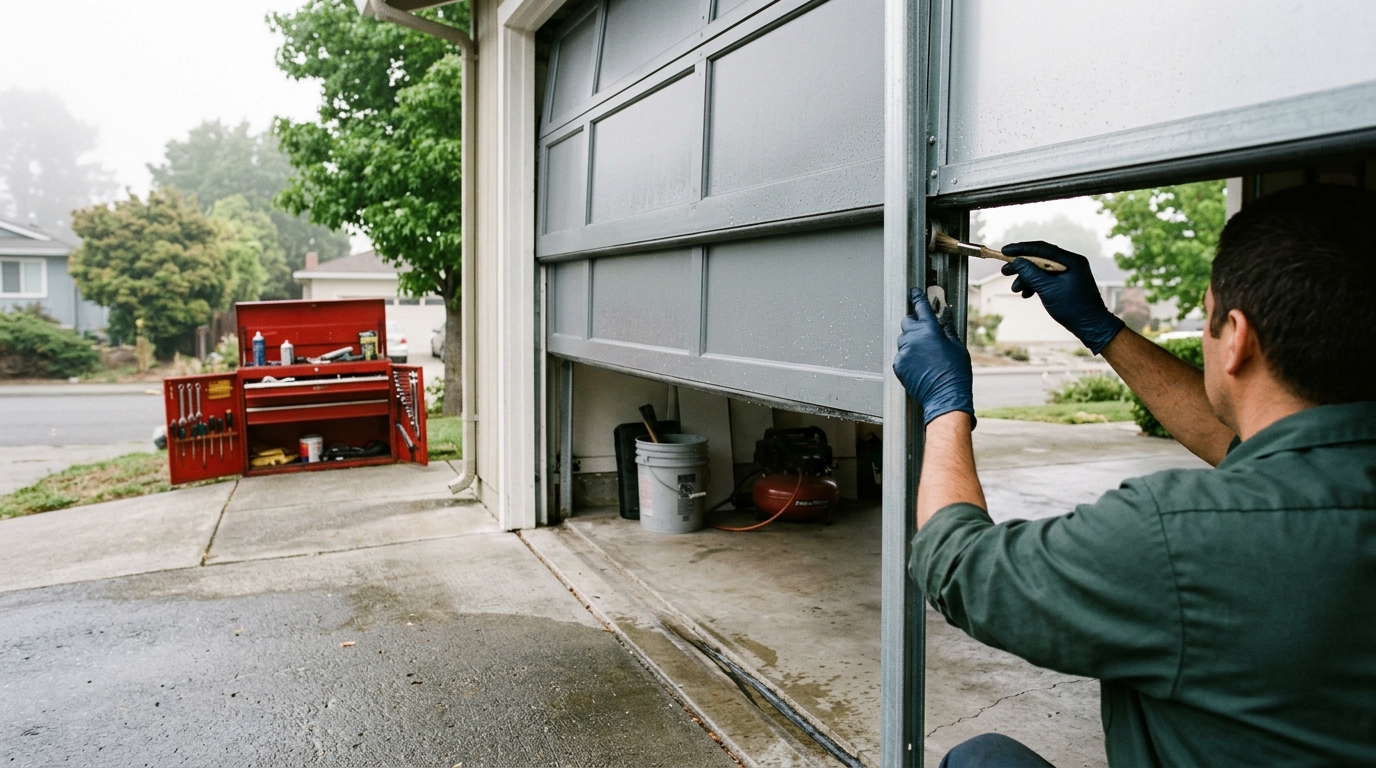
- Fog and moisture make seals, rollers, and exposed hardware worth checking
- Older openings may need alignment review before new parts are blamed
Repair, maintenance, or replacement
Many doors can be repaired when one failed component is the real problem and the rest of the system is still serviceable. Maintenance makes sense when the door is sound but loud, dry, loose, or drifting out of adjustment. Replacement makes sense when panels are badly bent, hardware is unsafe, matching sections are unavailable, or repair would be poor value.
When you call (650) 980-7050, describe what happened, what the opener did, whether the door is level, and whether any spring, cable, roller, or panel looks damaged. The conversation should stay specific. The right next step depends on the actual door, current schedule, parts, route, and the condition found during inspection.
- Repair when a specific failed part explains the symptom
- Maintain when the door is structurally sound but rough or noisy
- Replace when repair would not be safe or sensible
- Ask for the scope to be explained before work proceeds
What to tell the dispatcher
Useful call details include the nearest Millbrae cross street, whether the door is stuck open or closed, whether the opener light flashes, whether a spring looks separated, whether a cable is loose, the opener brand if visible, and whether the garage is attached to living space. This information helps the service conversation start in the right lane without asking the homeowner to diagnose the system alone.
The pages on this site keep the same promise: no invented storefront address, no invented review count, no invented rating schema, and no exact arrival promise. The verified identity for this domain is Millbrae Garage Door Repair, the verified phone shown here is (650) 980-7050, and the content stays focused on Millbrae garage door service rather than broad unrelated city pages.
Questions worth answering before anyone touches the door
A careful repair conversation usually begins before the tool bag opens. Is the door still attached evenly on both sides? Did the problem start after a bump from a vehicle, after a loud sound, after a power outage, or after repeated opener reversal? Does the door move by hand, or does it feel heavier than normal? These questions matter because they separate convenience problems from safety problems.
A caller does not need technical vocabulary. Plain observations are enough. Say whether the opener light blinks, whether the remote works from the wall button but not the handheld remote, whether one cable looks loose, whether the door is tilted, and whether there is a gap at the bottom seal. That information helps the service conversation stay specific without asking the homeowner to loosen anything or take apart hardware.
For Millbrae homes with attached garages, quiet operation and vibration can matter as much as basic movement. A door that technically opens but shakes the room above it is still a problem. A door that closes but reverses every few cycles is not reliable. A door that drags on one side can damage panels, rollers, and the opener if it is ignored.
- Describe symptoms in plain language
- Mention whether a vehicle is trapped
- Do not remove covers, springs, cables, or brackets
- Tell the dispatcher if the garage is attached to living space
- Keep people and pets away from a crooked or hanging door
How the guide connects to the service pages
The blog is not a separate silo. It is built to connect the safety and planning questions back to the actual service pages: spring replacement, opener repair, cable repair, off-track correction, panel replacement, maintenance, and new door planning. That internal structure matters for visitors because it lets someone start with a symptom and then move to the page that explains the likely service category.
This is also why the content avoids broad claims that would apply to every city in California. Millbrae has hillside access, airport-area commute patterns, older home openings, compact townhome garages, attached garages, and cool moisture. Those details do not prove a diagnosis by themselves, but they shape the questions a good technician asks before recommending repair, maintenance, or replacement.
The most useful next step is a clear phone conversation. When the door is safe to look at, photos can help. When it is not safe, the better move is to stop using it and explain the symptom from a distance. Either way, the verified call path on this domain remains the same: (650) 980-7050.
- Use service pages for specific repair categories
- Use blog pages for symptom education and safe prep
- Use contact when the door condition needs a real conversation
- Keep all phone, schema, footer, and form details consistent
- Avoid isolated posts that are never linked from the main site
What this guide does not claim
This page does not claim a public storefront address, a star rating, a review count, a license number, twenty-four-hour coverage, or a fixed arrival window. Those claims would need their own verified source before appearing on the page. The safer and more useful approach is to explain the actual garage door problem, the visible symptoms, and the safety boundary.
It also does not turn a high-tension repair into a do-it-yourself project. Springs, cables, bottom brackets, drums, and doors that are off track can move suddenly. A homeowner can check power, remotes, locks, and visible obstructions, but loaded hardware belongs in a service conversation. That distinction is part of the upgrade: the page should help people act calmly, not encourage risky shortcuts.
A good garage door page wins trust by being specific, readable, and honest. The visitor should see real images, visible text, a working call path, a working form route, and internal links that make sense. If any of those are hidden, broken, or copied from another domain, the site is not finished.
- No fake public address
- No fake rating or review schema
- No exact arrival promise
- No unsafe DIY spring or cable instructions
- No copied phone number from the .net domain